
Fair Trade in Spice Sourcing: Empowering Indonesian Local Farming Communities
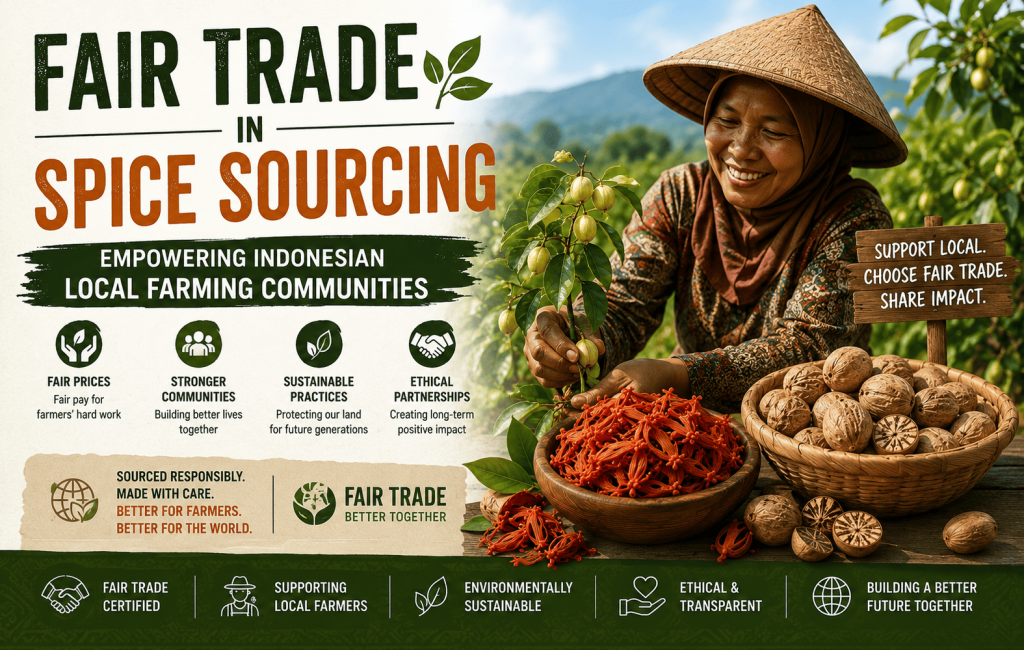
Fair Trade in Spice Sourcing: Empowering Indonesian Local Farming Communities
For B2B importers, incorporating fair trade spice sourcing into procurement strategies offers tangible benefits beyond ethical compliance. Specifically, fair trade partnerships ensure supply chain stability, premium product quality, and alignment with global corporate sustainability standards. Consequently, understanding how fair trade operates within Indonesian spice communities helps buyers make informed sourcing decisions. For broader context on regulatory compliance, see our FDA and EU compliance guide for nutmeg and mace. Moreover, these partnerships create lasting value throughout the supply chain.
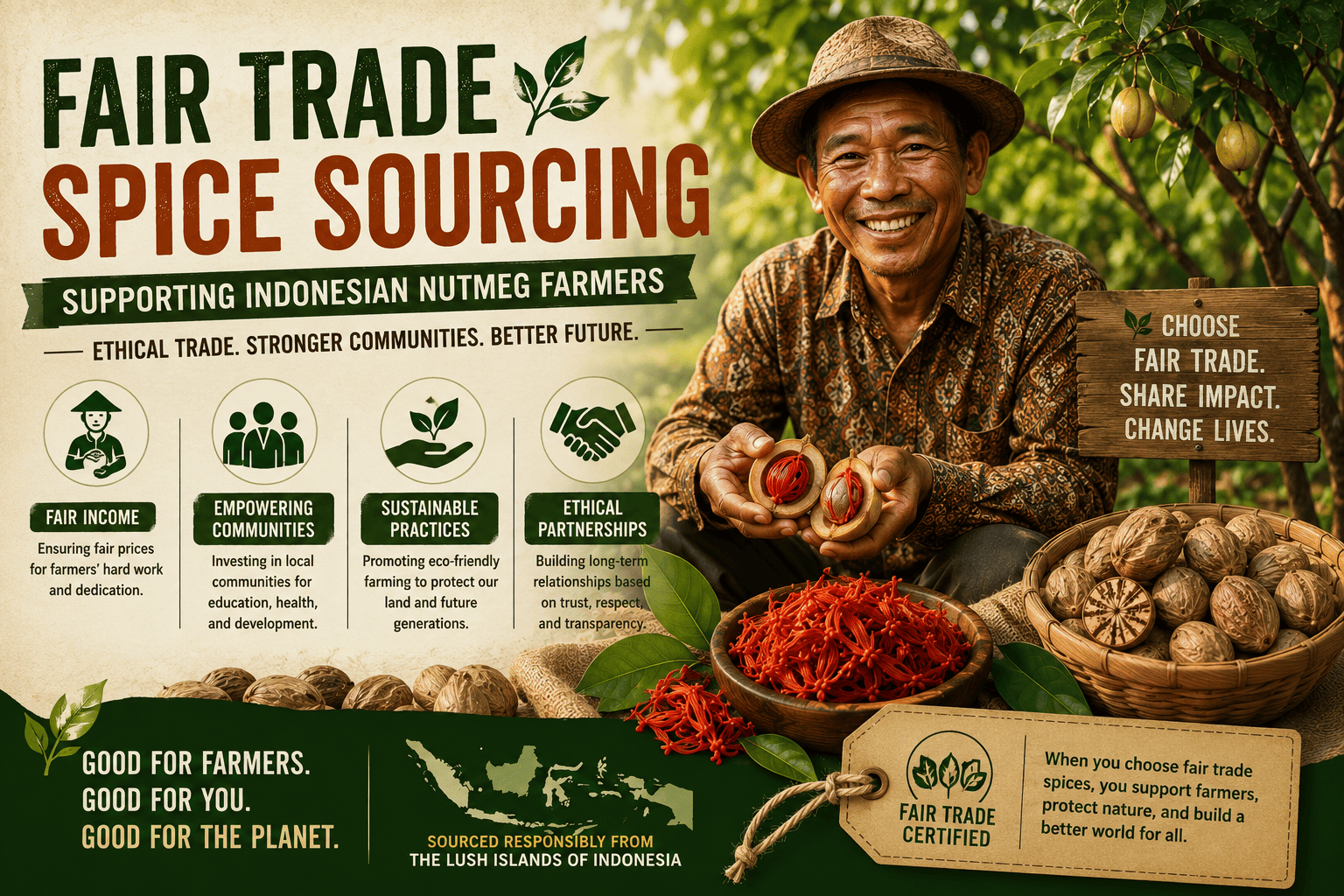
Fair Trade Spice Sourcing: Key Principles for Buyers
Firstly, fair trade is a trading partnership that seeks greater equity in international commerce. For the spice industry, this translates into several key principles as outlined below:
| Principle | Description | Impact on Farmers |
|---|---|---|
| Fair price | Minimum price guarantee covering production costs | Subsequently, income stability regardless of market fluctuations |
| Premium fund | Additional funds for community development projects | Consequently, investment in education, healthcare, infrastructure |
| Direct trade | Reduced intermediary chain, closer buyer-farmer relationship | As a result, higher farmer profit share |
| Labor standards | No child labor, safe working conditions | Ultimately, improved quality of life |
| Environmental stewardship | Sustainable farming practices, no deforestation | Accordingly, long-term farm viability |
| Transparency | Open communication on pricing and supply chain | In turn, trust and accountability |
Typically, producers and cooperatives must meet these principles to receive Fairtrade certification from recognized bodies such as Fairtrade International (FLO) or the World Fair Trade Organization (WFTO).
Fair Trade Spice Sourcing: Indonesian Nutmeg Farming Landscape
Indonesia is the world’s largest producer of nutmeg and mace, with an estimated 70–80% of production coming from smallholder farmers. In particular, the Maluku Islands (the Spice Islands) remain the heart of Indonesian nutmeg cultivation. Additionally, regions like Aceh and Sulawesi contribute significantly to national output:
| Characteristic | Smallholder Farmers | Plantation Estates |
|---|---|---|
| Share of national production | 75–80% | 20–25% |
| Average farm size | 0.5–2 hectares | 10–50+ hectares |
| Typical yield per hectare | 500–900 kg | Consequently, 800–1,500 kg |
| Certification adoption | Limited (cost barrier) | Higher (FSSC, organic) |
| Direct export capability | Rare (via cooperatives) | Yes |
In addition, most smallholder farmers in regions such as the Banda Islands, Aceh, and Sulawesi rely on nutmeg as their primary income source. Therefore, fair trade practices have a direct and measurable impact on poverty reduction in these communities.
Fair Trade Spice Sourcing Certification and Impact
Furthermore, Fairtrade certification for Indonesian nutmeg and mace provides several quantifiable benefits:
Economic Impact in Fair Trade Spice Sourcing
| Metric | Before Fair Trade | After Fair Trade |
|---|---|---|
| Farmer income per kilogram | Market price only | Market price + Fairtrade minimum + premium |
| Fairtrade premium received | N/A | Consequently, $0.50–$1.00 per kg (community fund) |
| Price stability | Subject to market volatility | Protected by minimum price floor |
| Access to credit | Limited (local money lenders) | Improved (cooperative pre-financing) |
Social Impact of Fair Trade Certification
- Notably, Fairtrade premiums fund community-selected projects such as school construction and clean water access
- Specifically, farmer cooperatives gain bargaining power through collective selling, thus improving their market position
- Furthermore, women farmers receive equal representation in cooperative governance structures
- Also, child labor monitoring systems are implemented and verified accordingly
- In addition, cooperative membership provides access to training and resources
Environmental Impact of Fair Trade Practices
- Firstly, Fairtrade standards prohibit deforestation for spice cultivation
- Next, farmers receive training on shade-grown nutmeg agroforestry methods
- Also, restrictions on hazardous pesticides protect soil and water quality
- Finally, biodiversity conservation is incentivized through premium funding
The Fairtrade International standard for spices provides the detailed requirements for certified production and trading. Furthermore, these standards are regularly updated to reflect evolving best practices.
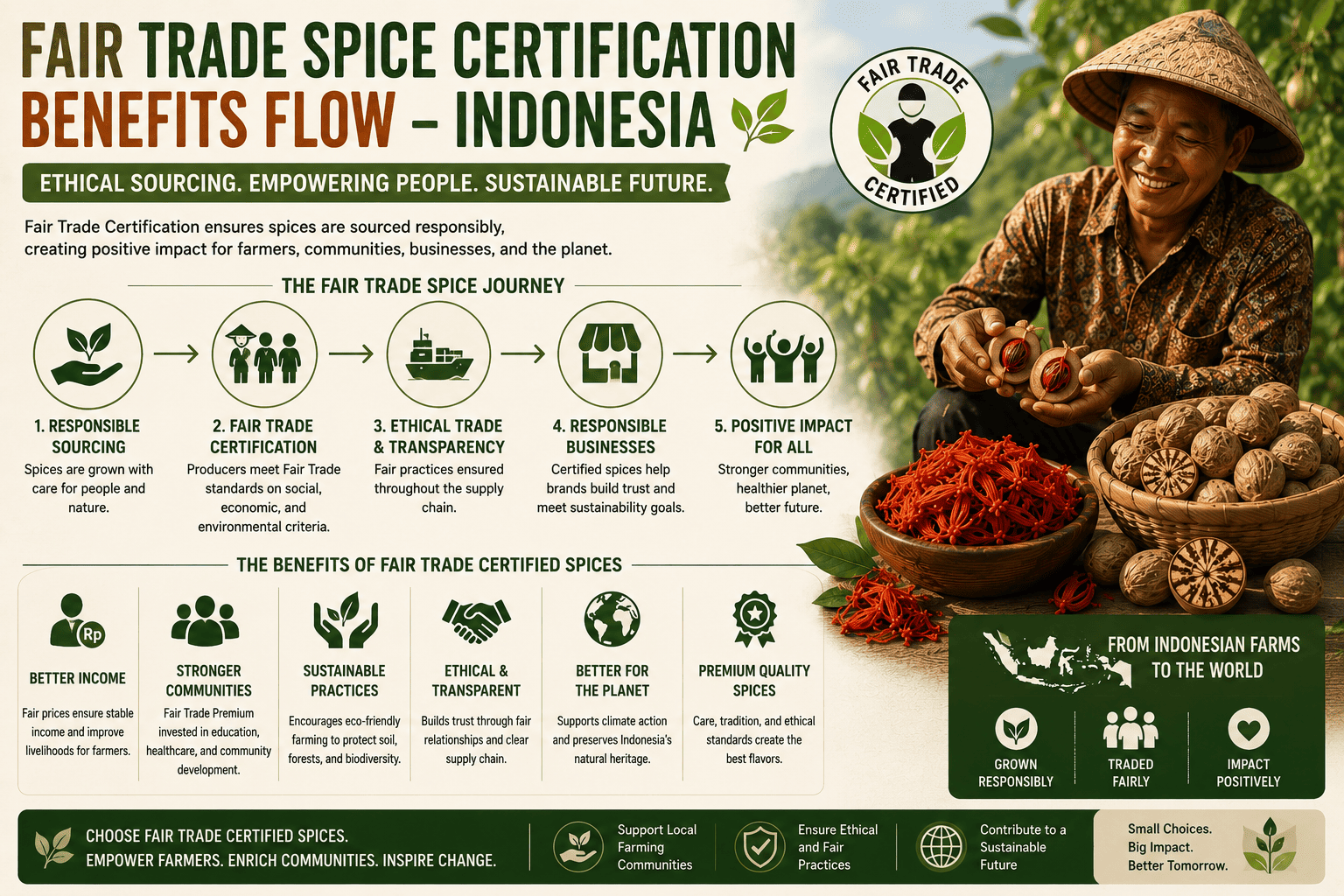
B2B Benefits of Fair Trade Spice Sourcing
Similarly, fair trade spice sourcing offers direct advantages for B2B importers and manufacturers:
Supply Chain Security
- Specifically, fair trade cooperatives provide consistent volume commitments, reducing supply disruption risk
- Furthermore, long-term relationships with farmers encourage investment in tree maintenance and quality improvement
- Additionally, traceability systems meet EUDR and FSMA compliance requirements, thereby simplifying regulatory adherence
- Moreover, price stability via minimum price mechanisms simplifies budgeting
Brand and Market Positioning
As consumer awareness of ethical sourcing grows, fair trade certification differentiates products in retail and food service markets. For example:
| Market Segment | Consumer Willingness to Pay Premium | Key Driver |
|---|---|---|
| Retail (supermarket) | 10–20% | Fairtrade label recognition |
| Food service | 5–15% | Corporate sustainability commitments |
| Specialty/Organic | 15–30% | Story-driven marketing |
| Industrial processing | 2–5% | Consequently, supply chain compliance |
Risk Mitigation
- Likewise, ethical sourcing reduces reputational risk from labor or environmental violations
- Similarly, verified supply chains withstand customer audits and regulatory scrutiny
- Moreover, cooperative structures provide resilience during market downturns, thus maintaining supply continuity
- Fair trade sourcing likewise fosters long-term supplier loyalty
How to Verify Fair Trade Spice Sourcing Claims
Therefore, B2B buyers should verify suppliers’ fair trade claims through the following methods:
Documentation for Ethical Spice Sourcing
- First, valid Fairtrade certificate from FLO-CERT or equivalent certifying body
- Next, cooperative registration documents and membership records
- Also, Fairtrade premium usage reports showing community fund allocation
- Additionally, third-party audit reports conducted annually
- Finally, product traceability documentation from farm to export point
Red Flags in Fair Trade Spice Sourcing
- First, unusually low prices inconsistent with Fairtrade minimum pricing, which signals potential certification issues
- Second, lack of transparent cooperative governance documentation
- Third, no evidence of premium fund disbursement to communities, indicating possible misuse
- Fourth, certification scope limited to only one product line
Consequently, working with established Indonesian exporters who source directly from certified cooperatives simplifies verification. The WFTO fair trade standard guidelines offer additional reference for evaluating ethical supply chain claims.
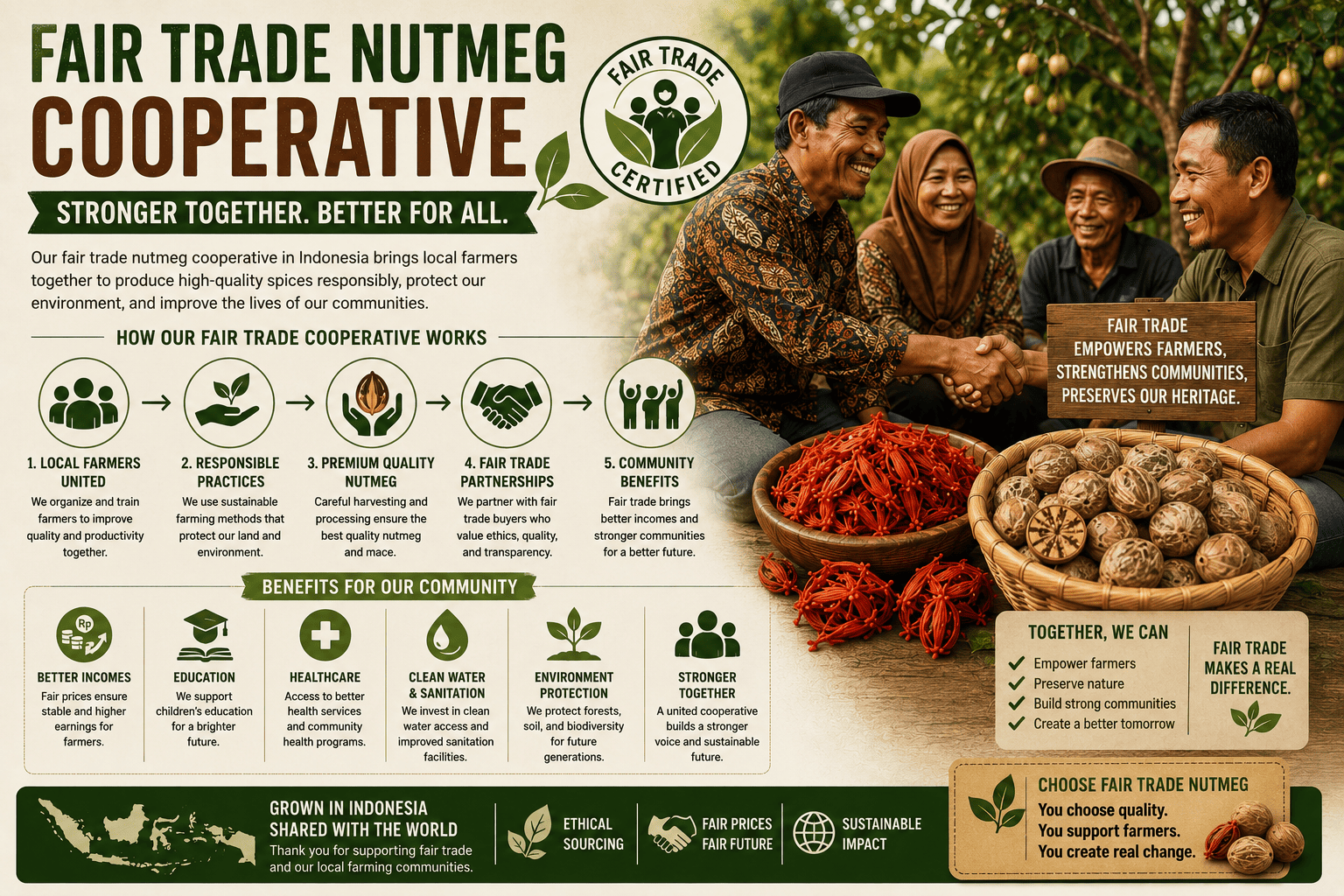
Fair Trade Spice Sourcing: Conclusion for B2B Buyers
In summary, fair trade spice sourcing represents a strategic advantage for B2B importers rather than merely an ethical choice. Overall, it provides price stability, supply chain security, regulatory compliance support, and brand differentiation. For Indonesian farming communities, the impact is transformative: stable incomes, community investment, and sustainable farming practices.
For more information about our fair trade and ethically sourced nutmeg and mace, please reach out:
Email: [email protected]
WhatsApp B2B Helpline: +62 822-3332-2034
Head Office & Export Coordination: Modinan RT 007/RW 021, Banyuraden, Gamping, Sleman, DIY – Indonesia