
Bulk Nutmeg Shipping & Packing Standards: Ensuring Freshness in Sea Freight
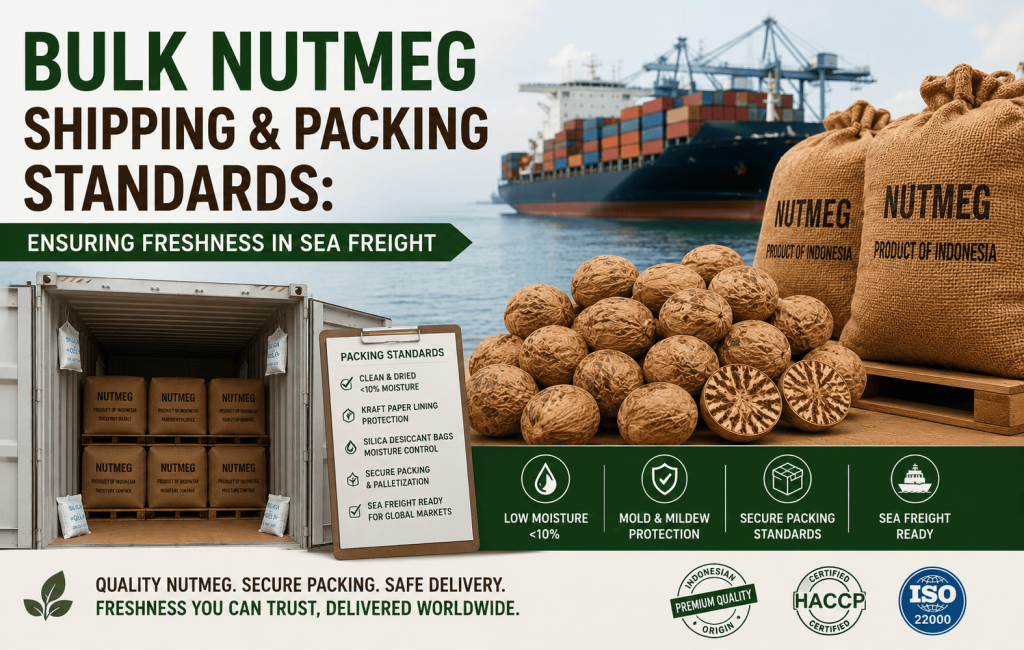
Bulk Nutmeg Shipping & Packing Standards: Ensuring Freshness in Sea Freight
For procurement officers and logistics managers responsible for bulk nutmeg shipping, the journey from Indonesian warehouses to European ports is far more scientifically complex than simply filling a container and sealing it shut. Indeed, a single oversight in bulk nutmeg shipping methodology can transform a USD 80,000 investment into mold-contaminated waste before the vessel even reaches the first port of call. Consequently, understanding the engineering principles behind proper moisture control, desiccant deployment, and container conditioning is not merely a best practice—it is an absolute operational requirement for maintaining supply chain integrity and regulatory compliance during international sea freight operations. In essence, this knowledge is mission-critical.
This comprehensive guide addresses the end-to-end logistics framework for bulk nutmeg shipping, covering container selection, pre-shipment preparation, desiccant strategies, anti-sweat packing protocols, and real-time monitoring systems used by leading Indonesian exporters to guarantee product freshness across thousands of kilometers of ocean voyage. Importantly, whether you are sourcing Grade ABCD nuts for culinary markets or BWP kernels for industrial extraction, the principles outlined here apply universally to all bulk nutmeg shipping operations and represent industry best practices. Furthermore, these standards ensure regulatory compliance and minimize cargo loss risk. Significantly, following these guidelines transforms shipping from guesswork into engineered precision.
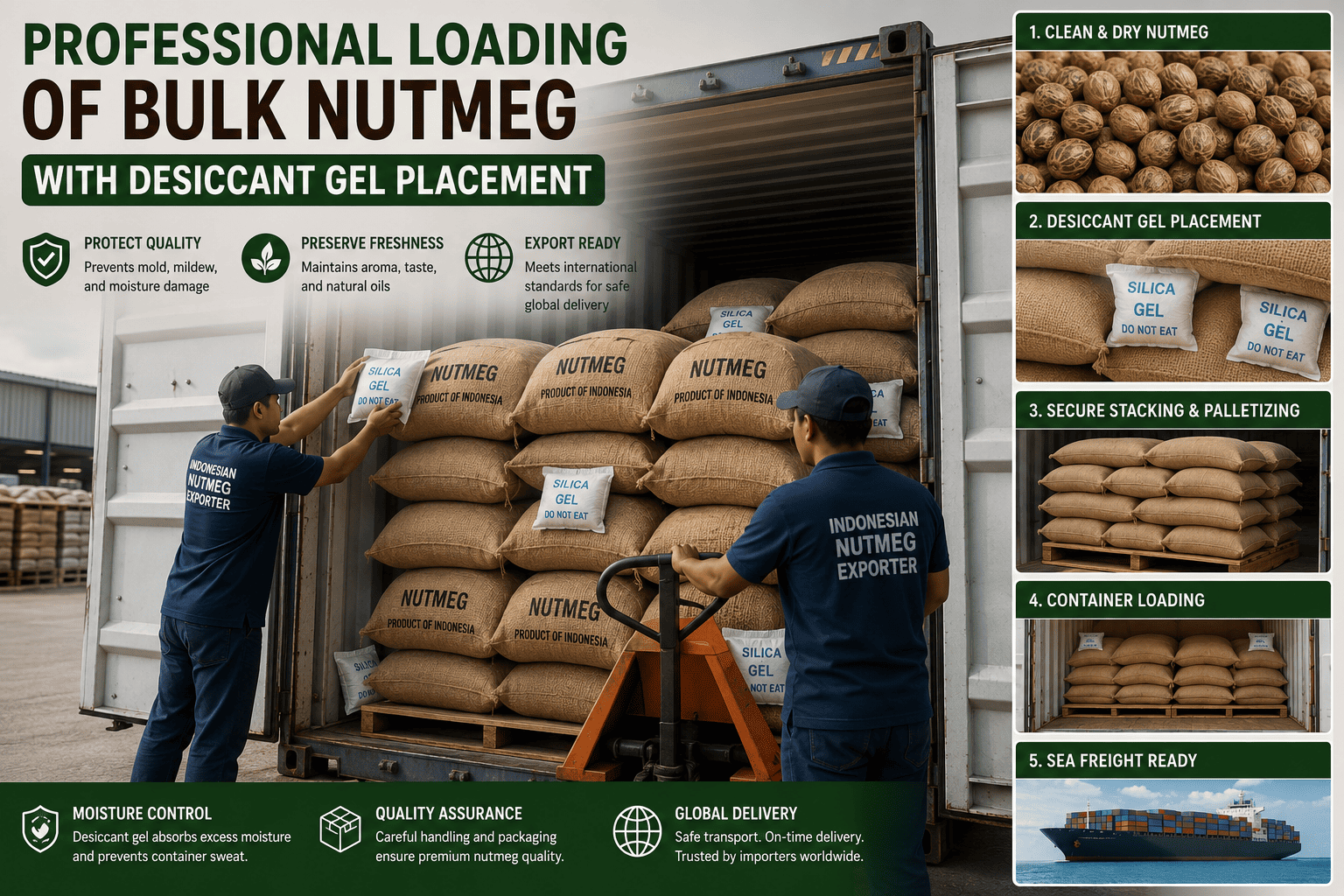
1. The Science of Container Sweat: Understanding Moisture Dynamics in Ocean Freight
Container sweat — technically termed “cargo sweat” or “container sweat” in maritime logistics — is the primary enemy of bulk nutmeg shipping. This phenomenon occurs when a sealed container transitions between vastly different temperature and humidity zones during its journey from the tropical export port to temperate or cold import destinations. To clarify, this process happens unavoidably during long sea voyages. Notably, understanding this mechanism is essential for preventing total cargo loss. In essence, temperature differentials drive the entire problem.
1.1 Tropical Export Port Conditions
When a full container of nutmeg departs from an Indonesian port (e.g., Surabaya, Belawan), the internal air temperature and relative humidity are typically elevated. Specifically, the tropical conditions are as follows:
- Temperature: 28–32°C (tropical ambient)
- Relative Humidity (RH): 75–90% (saturated with moisture)
The nutmeg cargo itself has been dried to approximately 10–12% moisture content (MC) on a wet basis (assuming Grade ABCD specifications). However, the surrounding air inside the sealed container remains highly saturated with water vapor. Additionally, as the vessel transits through cooler latitudes, the container gradually experiences dramatic thermal shifts. Critically, this thermal variation is the primary driver of condensation formation.
- Transition Zone 1 (Equatorial to Subtropical): 28°C → 18°C
- Transition Zone 2 (Mediterranean / North Atlantic): 18°C → 8°C
- Final Destination (Northern Europe): 8°C → 4°C
1.2 Dewpoint and Condensation Physics
According to psychrometric science, when air cools, its dew point (the temperature at which air becomes saturated and water vapor condenses into liquid) is reached sooner. Significantly, if the internal container air cools from 28°C (RH 80%) to 12°C, the dew point is crossed, and water vapor condenses directly onto the coldest surfaces. Notably, this condensation accumulates rapidly on:
- The inner steel walls of the container (which cool fastest) — In particular, these walls conduct thermal energy rapidly
- The outer surface of burlap/jute bags — Additionally, these surfaces absorb moisture instantly
- Surface kernels of the topmost nutmeg layers — Furthermore, this top layer is especially vulnerable
Once condensation occurs, the local microclimate around the nutmeg becomes favorable for Aspergillus flavus and Aspergillus parasiticus mold colonization. Consequently, aflatoxin production develops within 7–14 days if moisture persists above 14% MC. Importantly, this timeline is shockingly rapid. In fact, this speed is why container sweat is so catastrophic.
1.3 Why Indonesian Nutmeg Is Particularly Susceptible to Container Sweat
Critically, Indonesian nutmeg is particularly susceptible to container sweat for several compelling reasons. This vulnerability arises from multiple factors:
1. High Oil Content: Nutmeg kernels contain 25–35% fixed oil (myristicin oil), which creates an energy-rich substrate for fungal growth once moisture is present. Moreover, this high fat content makes the nut particularly attractive to mold colonies. Specifically, this property is fundamentally different from other spices. Indeed, this factor is often underestimated in logistics planning.
2. Complex Internal Structure: In contrast to spherical seeds (e.g., pepper corns), nutmeg kernels have an intricate internal matrix with air pockets. Importantly, moisture can be absorbed into these internal structures even if the surface appears dry, creating localized zones of 15–18% MC inside the kernel. Indeed, this hidden moisture poses tremendous risk. Notably, standard visual inspection cannot detect this internal saturation.
3. Extended Drying Process: Furthermore, achieving uniform <10% MC throughout a full kernel requires 8–10 weeks of tropical sun-drying. Often, commercial processors cut corners to accelerate timelines, leaving residual moisture. Notably, this residual moisture increases mold risk exponentially. Consequently, proper drying is absolutely critical to preventing container sweat. Essentially, this step determines success or failure in bulk nutmeg shipping.
2. Regulatory Standards for Bulk Nutmeg Shipping: EU, US FDA, and International Compliance
Any bulk nutmeg shipping operation targeting EU, US, or certified-destination imports must comply with multiple regulatory frameworks. These requirements are non-negotiable:
2.1 European Union: Bulk Nutmeg Shipping Import Tolerance & Mycotoxin Limits
Crucially, the European Commission (Regulation 1881/2006, as amended) sets maximum levels (MLs) for mycotoxins in spices. These limits are stringent. Notably:
- Aflatoxin B1: 5 ppb (parts per billion)
- Total Aflatoxins (B1+B2+G1+G2): 10 ppb
- Ochratoxin A: 15 ppb (for certain spices including nutmeg)
Importantly, these thresholds are legally binding on all import operations. Crucially, for bulk nutmeg shipping to EU ports, all shipments must include a Certificate of Analysis (COA) from an accredited laboratory (SGS, Eurofins, or equivalent) showing <5 ppb Aflatoxin B1 and moisture content <10% MC at the time of loading. Significantly, this documentation is non-negotiable for port clearance. In fact, shipments without valid COAs are automatically rejected.
2.2 United States: FDA Regulations on Spice Safety
In contrast, the US FDA does not establish fixed ML thresholds for aflatoxins in spices (unlike the EU), but instead applies a “reasonable expectation” standard. Significantly, any shipment with aflatoxins >15 ppb is automatically detained and refused entry. Importantly, for practical bulk nutmeg shipping to US ports, the industry standard is <5 ppb Aflatoxin B1 and moisture content <10% to ensure compliance with both FDA and buyer specifications. Therefore, exporters should aim for EU standards even for US shipments. Moreover, this approach minimizes regulatory risk and ensures market flexibility.
2.3 ISO 22000 & HACCP Requirements for Bulk Nutmeg Shipping Compliance
For exporters holding ISO 22000:2018 (Food Safety Management System) or HACCP certification, bulk nutmeg shipping operations must include rigorous protocols. Specifically, these requirements include:
- Pre-shipment laboratory testing (final COA with moisture, volatile oil %, microbiota counts)
- Container inspection & sanitation (third-party certification of container cleanliness)
- Desiccant deployment documentation (type, quantity, placement records)
- Real-time monitoring (optional: temperature/humidity data loggers inside containers)
Significantly, compliance with these standards strengthens buyer confidence and represents a key selling point for differentiated exporters like Bhavana Spice. Importantly, such investment demonstrates commitment to quality. Therefore, certification is highly valuable. In essence, this certification transforms bulk nutmeg shipping from a transactional commodity into a premium service offering.
3. Container Selection for Bulk Nutmeg Shipping: Material, Condition, and Sizing
Proper bulk nutmeg shipping begins with selecting the correct container type and verifying its condition before loading. Essentially, choosing between 20-foot (TEU) and 40-foot (FEU) containers depends on voyage length and budget considerations. Moreover, each option carries distinct advantages for different routes. Therefore, understanding the differences is critical. Additionally, cost-benefit analysis is essential for route optimization. Indeed, container selection significantly impacts the total landed cost.
3.1 Bulk Nutmeg Shipping: 20-Foot (TEU) vs. 40-Foot (FEU) Container Specifications
| Parameter | 20-Foot Container (TEU) | 40-Foot Container (FEU) |
|---|---|---|
| Internal Dimensions | 5.87m × 2.35m × 2.38m | 12.03m × 2.35m × 2.38m |
| Cargo Capacity | ~33 m³ | ~67 m³ |
| Typical Nutmeg Capacity (50kg bags) | 200–220 bags (~10–11 metric tons) | 420–450 bags (~21–22.5 metric tons) |
| Surface Area (m²) | ~60 m² | ~120 m² |
| Condensation Risk | Moderate (smaller air volume, faster cooling) | Higher (larger air volume, slower equilibration) |
| Desiccant Requirement | 150–200 kg silica gel packets | 300–400 kg silica gel packets |
| Recommended For | Asian/US West Coast routes | Transatlantic & long-haul routes |
For bulk nutmeg shipping, the 40-foot FEU container is preferred for long-distance voyages. Moreover, it offers better economy of scale. Additionally, FEU containers provide more surface area for desiccant placement. Furthermore, better air circulation opportunity exists with proper stacking patterns. Consequently, FEU containers are standard for international exports to Europe and North America.
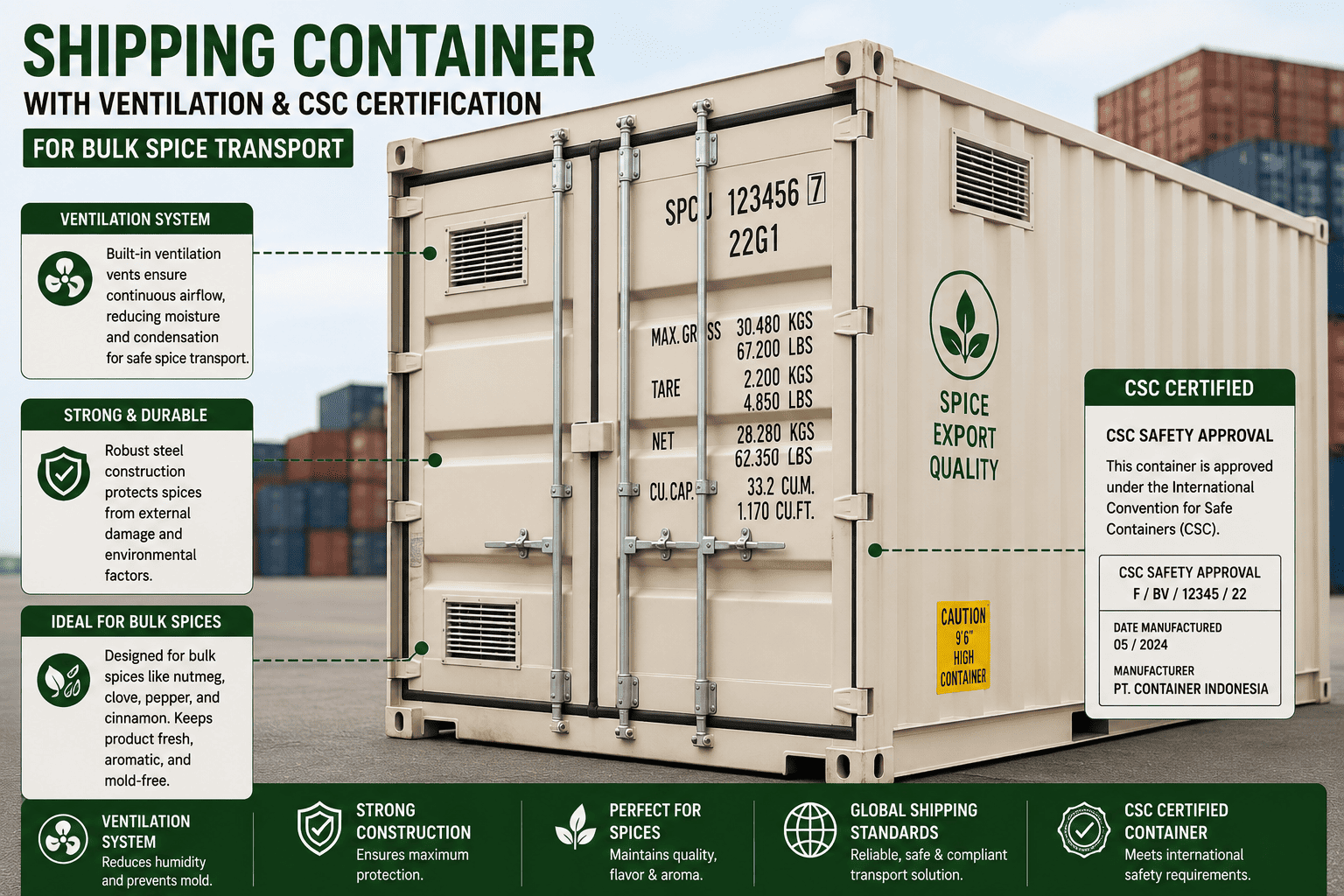
3.2 Container Grade & Condition Requirements
All containers used for bulk nutmeg shipping must meet these standards to ensure cargo safety and regulatory compliance:
- Grade “A” (New or near-new containers, <10 years old)
- Structural integrity: No rust, dents, or roof leaks
- Floor condition: Wooden flooring in good condition, no soft spots or moisture staining
- Door seals: Rubber gaskets intact and pliable
- Interior paint: Not peeling or flaking (risk of contamination)
- Pre-Shipment Container Inspection Certificate
- Issued by third-party surveyor (SGS, Intertek, or equivalent)
- Importantly, documented air-tightness test (permeability must be <0.1% per 24 hours)
- Moisture content inside container: <15% RH before loading (verified with calibrated hygrometer)
- Container Fumigation & Cleaning
- Significantly, all containers destined for bulk nutmeg shipping must be fumigated with methyl bromide or equivalent 24–48 hours before loading
- Furthermore, interior washing with dilute food-grade disinfectant (sodium hypochlorite 200 ppm) is essential
- Finally, air-drying under sun for minimum 12 hours post-cleaning is required
4. Bulk Nutmeg Shipping Desiccant Strategy: The Cornerstone of Anti-Sweat Packing
Desiccants are the primary mechanism for preventing container sweat during bulk nutmeg shipping. Critically, a proper desiccant strategy absorbs excess atmospheric moisture inside the sealed container before it can condense on cargo. In essence, this is non-negotiable for successful exports. Therefore, skipping desiccants is simply not an option. Unquestionably, desiccants are the single most important investment in bulk nutmeg shipping success.
4.1 Types of Desiccants for Bulk Nutmeg Shipping Logistics
The selection of desiccant type is critical for optimal moisture control. Specifically, different desiccant materials offer varying absorption capacities and cost profiles:
| Desiccant Type | Composition | Absorption Capacity | Cost (per kg) | Recommended For Nutmeg |
|---|---|---|---|---|
| Silica Gel (Standard) | SiO₂ (amorphous) | 40–50% of own weight | USD 0.50–0.80 | ✅ Standard (Best value) |
| Silica Gel (Blue Indicator) | SiO₂ + cobalt chloride (color-change indicator) | 40–50% of own weight | USD 0.80–1.20 | ✅ Premium (Visual saturation tracking) |
| Molecular Sieve (3Å) | Synthetic zeolite, ultra-low pore | 25–30% of own weight | USD 1.50–2.50 | ⚠️ Overkill for nutmeg |
| Activated Charcoal | Porous carbon | 20–30% of own weight | USD 1.00–1.50 | ❌ Not recommended (absorbs aromas) |
| Quicklime (CaO) | Calcium oxide (caustic) | 25–30% of own weight | USD 0.20–0.40 | ❌ Risk of burns, corrosion |
Recommendation for Bulk Nutmeg Shipping: Silica Gel (Blue Indicator), 5–10mm pellets, packed in breathable non-woven sachets. Importantly, this choice balances cost-effectiveness with reliability.
Notably, this combination provides optimal moisture absorption while enabling visual monitoring of saturation levels. Specifically, the blue-to-pink color change indicates desiccant saturation, allowing real-time assessment during voyage.
4.2 Calculating Desiccant Requirements & Deployment Strategy
To calculate the precise desiccant requirement for bulk nutmeg shipping, exporters use the following scientific formula: Desiccant (kg) = Container Volume (m³) × Ambient RH Factor × Load Density. Essentially, this calculation ensures adequate coverage. Importantly, underdosing desiccant defeats the entire purpose. Moreover, proper calculation is the foundation of effective moisture control.
To illustrate this calculation, consider a 40-foot FEU container with 22 metric tons of nutmeg in tropical origin:
- Container volume: 67 m³
- Ambient RH: 80% (typical Surabaya port)
- Load density: High (bags stacked densely)
- Calculation: 67 m³ × 0.80 × 6 kg/m³ = ~320 kg silica gel
For practical deployment, divide desiccant into 3 strategic layers to ensure comprehensive coverage. Specifically, this layering approach maximizes coverage:
- Floor layer: 100 kg silica gel spread across container floor (under pallet boards) — Notably, this base layer catches rising moisture
- Mid-layer: 110 kg distributed among middle rows of bags (every 2–3 bag layers) — Furthermore, middle positioning captures airborne vapor
- Top layer: 110 kg placed above topmost layer of cargo, under container roof — Additionally, this catches condensation before it drips
Essentially, this three-layer strategy ensures maximum moisture absorption throughout the container’s air volume.
For optimal results, consider the following placement specifics carefully:
- Distribute desiccant sachets in perforated polypropylene bags (allows moisture vapor to reach desiccant) — Importantly, perforated design is essential
- Space sachets 30–50cm apart horizontally to ensure air circulation — Moreover, proper spacing prevents dead zones
- Ensure minimum 10cm clearance from container walls (to prevent blocking ventilation) — Critically, wall spacing is non-negotiable
4.3 Desiccant Management During Bulk Nutmeg Shipping Voyage
Exporters should include optional: Real-time monitoring devices inside containers. Notably, modern Temperature/Humidity Data Loggers (e.g., Vaisala, Dickson models) offer:
- Record internal T/RH every 1–2 hours throughout voyage
- Alert buyer if RH exceeds 70% (early warning of desiccant saturation)
- Cost: USD 50–100 per device
Moreover, data loggers provide documented evidence of moisture control compliance. Significantly, this transparency strengthens buyer confidence and can justify premium pricing. Furthermore, the investment cost is minimal compared to cargo loss risk.
Documentation package for buyer:
- Desiccant type, total quantity, and placement diagram — In particular, this detail proves professional planning
- Pre-shipment RH/T readings (interior container, cargo surface) — Moreover, baseline data is critical for comparison
- Post-loading RH/T readings (sealed container, 2 hours after sealing) — Additionally, post-seal readings confirm system integrity
- Data logger export CSV (if equipped) — Notably, complete data trails build buyer trust
5. Bagging & Inner Packaging: Creating Moisture Barriers
The immediate packaging surrounding nutmeg kernels plays an equally critical role in bulk nutmeg shipping as container-level desiccants. Specifically, this layer provides the first defense against moisture ingress. Critically, proper packaging ensures cargo arrives in export-grade condition. Furthermore, it protects the product during weeks of ocean voyage. In short, bagging is absolutely foundational to shipping success.
5.1 Primary Packaging: 50kg Multi-Wall Kraft Bags with Poly Lining
Standard industry practice for bulk nutmeg shipping demands precise specifications. Specifically:
Bag Specifications:
- Material: 4–5 ply kraft paper + 1 inner poly-ethylene (PE) layer — Specifically, this composition balances strength and breathability
- Weight capacity: 50 kg net weight per bag (maximum) — Notably, heavier bags compromise structural integrity
- Poly inner lining thickness: 50–75 microns (minimum) — Furthermore, thicker linings provide better vapor barriers
- Valve closure: Heat-sealed or stitched + sealed with kraft tape — Importantly, proper sealing prevents air leakage
- Labeling: Stenciled with nutmeg grade, weight, origin (Maluku/Siau/Sumatra), moisture %, and batch number — In fact, this traceability is legally required
Why poly lining matters:
The poly inner layer creates a vapor barrier that prevents moisture ingress from the container’s humid air into the nutmeg kernel. Without this critical protective measure, 50kg of ABCD-grade nuts (initially 10% MC) can absorb 2–3% additional moisture over 3–4 weeks of voyage, reaching 12–13% MC and triggering mold risk. Notably, this poly lining is therefore absolutely essential for successful bulk nutmeg shipping. Indeed, skipping this step virtually guarantees container sweat problems.
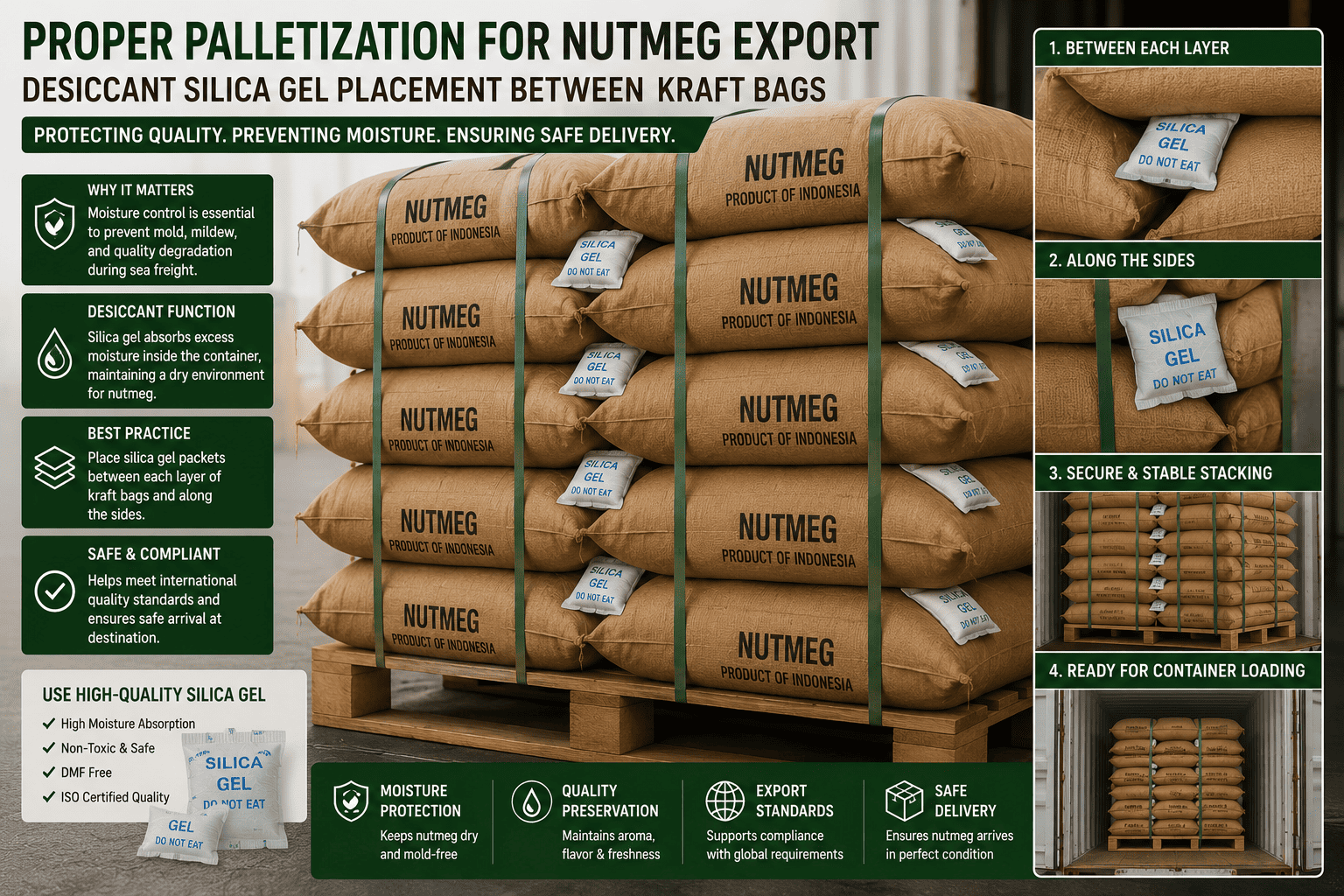
5.2 Bulk Nutmeg Shipping: Palletization Strategy & Container Loading
Proper bulk nutmeg shipping palletization ensures critical advantages:
- Even weight distribution (container balance) — Importantly, proper weight distribution prevents structural stress
- Air circulation (prevents dead zones where sweat accumulates) — Additionally, airflow is essential for desiccant effectiveness
- Access for handling (easy stacking/unstacking at destination port) — Furthermore, this accessibility simplifies customs inspections
Recommended palletization pattern:
- Pallet type: Standard Euro pallet (1.2m × 0.8m) or wooden pallet (1.0m × 1.2m)
- Stack height per pallet: 1.8–1.95m (leaving 0.40m clearance to container roof)
- Bags per pallet layer: 5 bags (1.0 × 1.2m pallet) or 6 bags (Euro pallet), arranged in 2 columns
- Layers per pallet: 4–5 layers (depending on pallet height choice)
- Total bags per pallet: 20–25 bags (1.0–1.25 metric tons)
Container loading pattern (40-ft FEU):
- Row 1 (rear): 2 pallets side-by-side = 40–50 bags
- First desiccant layer: 60kg silica gel packets distributed strategically between Row 1 and Row 2
- Row 2 (middle): 2 pallets side-by-side = 40–50 bags positioned for optimal airflow
- Second desiccant layer: 60kg silica gel packets distributed between Row 2 and Row 3 for continuous moisture absorption
- Row 3 (front): 2 pallets side-by-side = 40–50 bags placed closest to container doors
- Top layer: Remaining desiccant + protective cardboard sheet to seal cargo against condensation
Instead of haphazard loading, this strategic pattern allows for important advantages:
- Container truck (forklift) to easily extract pallets at destination
- Consistent airflow along the container aisles
- Even distribution of desiccant (not concentrating in one zone)
Consequently, this ensures optimal moisture management throughout the voyage.
5.3 Void-Fill & Dunnage in Containers
All empty spaces inside containers must be minimized to reduce the volume of air that can accumulate moisture. To accomplish this objective effectively:
6. Pre-Shipment Testing & Documentation for Bulk Nutmeg Shipping
No bulk nutmeg shipping should commence without rigorous pre-shipment verification to guarantee compliance and buyer confidence. Indeed, testing protocols and documentation are foundational to supply chain integrity. Moreover, this validation process protects both exporter and buyer. Importantly, skipping this step risks everything. Consequently, rigorous testing is non-negotiable.
6.1 Final Laboratory Testing Protocol (24 Hours Pre-Loading)
COA (Certificate of Analysis) Parameters: These are the critical measurements for export certification. Importantly, all parameters must pass defined thresholds for customs clearance.
| Test Parameter | Specification | Test Method | Acceptance Limit |
|---|---|---|---|
| Moisture Content (%) | <10.0% | Oven drying at 105°C/5h | PASS if ≤10% |
| Volatile Oil (%) | 5–9% (depends on grade/origin) | Steam distillation (Ph.Eur.) | PASS if meets origin benchmark |
| Aflatoxin B1 | <5 ppb | HPLC (ISO 16050) | PASS if <5 ppb |
| Total Aflatoxins | <10 ppb | HPLC (ISO 16050) | PASS if <10 ppb |
| Salmonella | Absent | ISO 6579-1 (chromogenic) | PASS if absent in 25g sample |
| E. Coli | <10 CFU/g | ISO 16654 | PASS if <10 CFU/g |
| Total Plate Count | <10⁴ CFU/g | ISO 4833-1 | PASS if <10⁴ CFU/g |
| Bulk Density (g/cm³) | 0.55–0.65 | Helium pycnometry | Reference only |
Testing laboratory recommendation: Accredited third-party labs (SGS Indonesia, Eurofins Asean, PT Sucofindo) with ISO/IEC 17025:2017 certification. Critically, these labs ensure standardized testing protocols. Moreover, independent verification adds credibility to COA documents. Additionally, this certification carries weight in customs disputes. Significantly, only accredited labs are accepted by EU/US importers.
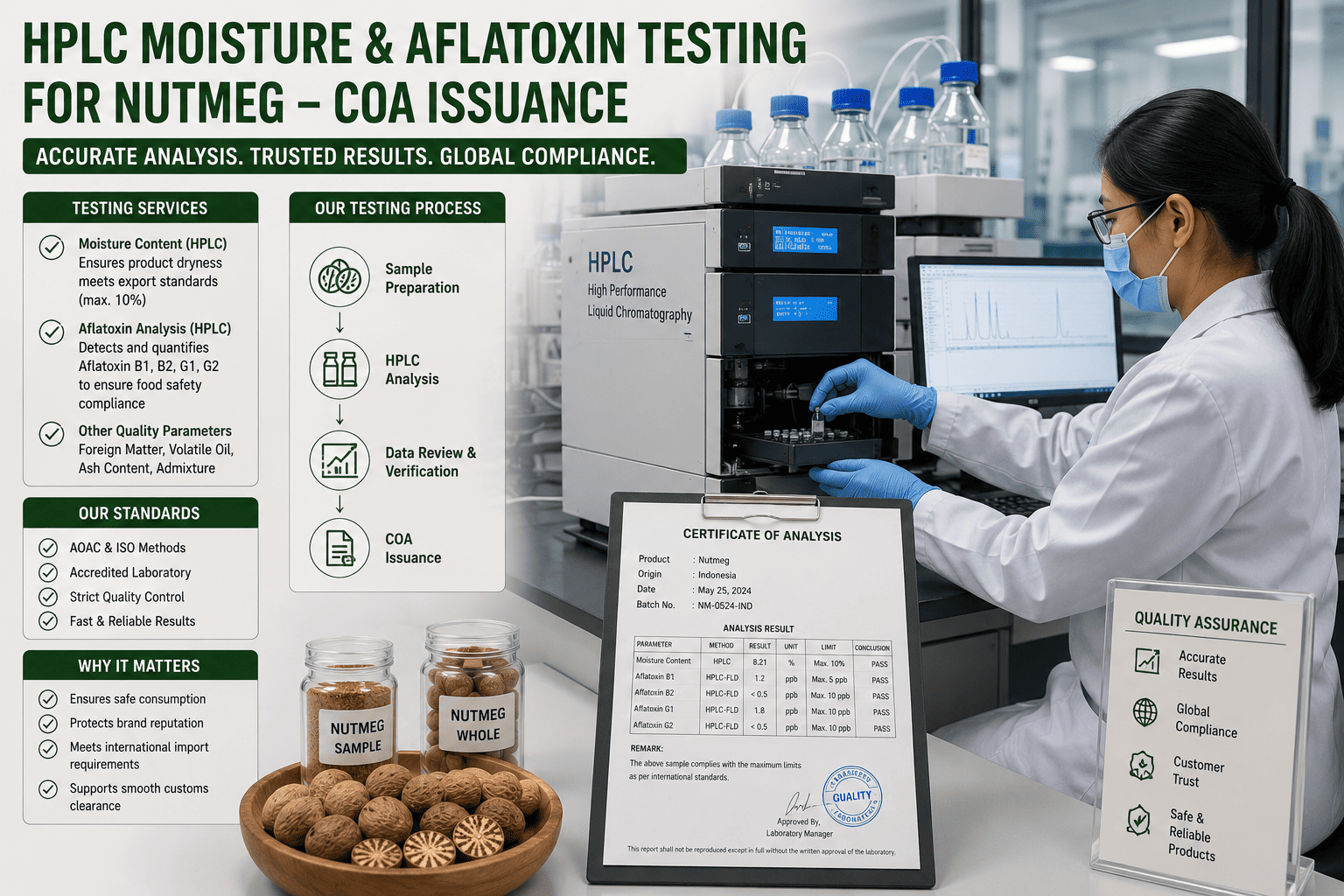
6.2 Bulk Nutmeg Shipping: Container Inspection & Sanitation Certificate Requirements
Third-party container surveyor must issue a CSC (Container Safety Convention) Certificate + Condition Report. Specifically, the documentation should verify structural integrity, cleanliness standards, and ventilation functionality. Furthermore, this certification is mandatory for food-grade bulk nutmeg shipping.
- Air-tightness certification (pressure test result)
- Fumigation receipt (date, chemical used, inspector sign-off)
- Cleanliness inspection (ATP swab test, food-safety compliant)
6.3 Bill of Lading (B/L) Documentation
For bulk nutmeg shipping, B/L must include detailed commodity information. Specifically, comprehensive documentation strengthens buyer confidence:
- Shipper: Bhavana Spice / Exporting company
- Consignee: Buyer (importation company)
- Notify Party: Buyer’s customs broker or freight forwarder
- Container number: Unique identifier
- Commodity description: “Decorticated Nutmeg Kernels, Grade [ABCD/SS/BWP], Origin [Maluku/Siau/Sumatra], 22,000 kg net, COA attached”
- Shipping terms: Typically CIF (Cost, Insurance, Freight) or FOB (Free on Board)
- Incoterm: As agreed (usually CIF to major EU ports)
Importantly, attach COA copy, container inspection cert, and desiccant deployment chart to B/L package for transparency. Furthermore, this documentation package enables seamless customs clearance and buyer confidence.
7. Monitoring & Contingency Protocols During Bulk Nutmeg Shipping Transit
Modern bulk nutmeg shipping operations can employ real-time monitoring to catch potential issues before arrival. Consequently, advanced technology solutions now enable proactive risk mitigation. Furthermore, these tools provide unprecedented visibility into cargo conditions during transit.
7.1 Temperature/Humidity Data Logger Tracking
Optional but recommended for premium shipments, Data Logger Tracking offers comprehensive real-time visibility and important insights:
- Buyer receives data export upon arrival (CSV file)
- If RH exceeds 75% for >4 consecutive hours, buyer is alerted to inspect cargo upon port arrival
- Cost impact: ~USD 150–250 per container
Notably, this monitoring tool provides objective evidence of shipper’s diligence. Consequently, it significantly strengthens insurance claims if sweat occurs despite best efforts.
7.3 Damage & Sweat Assessment at Port of Destination
Upon arrival at import port (Rotterdam, Hamburg, Los Angeles, Singapore), the buyer’s customs broker or QC team should systematically assess cargo condition. Specifically, the following steps ensure objective damage assessment:
- Visual inspection of container exterior: Note rust streaks, condensation dripping from roof vents (clear sign of sweat)
- Open container safely (door opening): Document interior condition carefully (condensation on walls?, dripping from roof?)
- Spot-check sample bags: For verification, open 3–5 bags (weight-selected from different pallet heights) and inspect kernels visually for mold/discoloration
- Moisture meter check: Importantly, use hand-held moisture meter on 2–3 sample bags (should read 10–12% MC)
- Photographic documentation: Critically, if any condensation/sweat is visible, photograph immediately as evidence for insurance claim
If sweat is confirmed and cargo sustains damages, the exporter’s shipping insurance (typically All Risks insurance with Marine Cargo coverage) covers the loss—provided the exporter followed all documented anti-sweat protocols. However, claiming insurance requires meticulous documentation. Therefore, photographic evidence at port of destination is absolutely critical. Moreover, this documentation should be submitted within 30 days of port arrival. In fact, timely submission significantly increases claim approval odds.
8. Cost-Benefit Analysis: Investing in Premium Packing vs. Risk of Cargo Loss
For bulk nutmeg shipping procurement officers, the investment case is compelling. Specifically, cost-benefit analysis reveals clear financial advantages. Therefore, choosing premium packing methods makes economic sense. Notably, the ROI calculations demonstrate this strategy is rational. In fact, premium packing is the only rational financial choice.
| Packing Method | Desiccant Cost | Container Inspection | COA Testing | Total Added Cost/FEU | Risk of Mold Damage |
|---|---|---|---|---|---|
| Economy (No desiccant, minimal QC) | USD 0 | USD 0 | USD 100 | ~USD 100 | 40–60% |
| Standard (150kg silica, basic inspection) | USD 200 | USD 150 | USD 200 | ~USD 550 | 10–15% |
| Premium (350kg silica, 3rd party cert, data logger) | USD 350 | USD 350 | USD 300 | ~USD 1,000 | <2% |
Real-world scenario: Critically, a 40-ft FEU of ABCD Grade nutmeg valued at USD 35,000 (40kg × USD 15/kg average) demonstrates the financial imperative:
- Economy method: USD 100 extra → 40% risk loss = USD 14,000 expected loss
- Premium method: USD 1,000 extra → <2% risk loss = USD 700 expected loss
- Net savings: USD 14,000 − USD 700 − USD 1,000 = USD 12,300 saved
Clearly, this analysis demonstrates why quality-focused exporters like Bhavana Spice justify premium pricing—the risk mitigation for buyers far exceeds the incremental shipping costs. In fact, the financial case is compelling and evidence-based. Additionally, this premium reflects genuine quality assurance investment. Significantly, buyers recognize this value and willingly pay for reduced risk.
9. Bhavana Spice: Our Bulk Nutmeg Shipping Excellence
At Bhavana Spice, we apply every standard outlined above as baseline operational practice. Consequently, quality assurance is embedded throughout our bulk nutmeg shipping process. Notably, we treat every shipment as mission-critical. In essence, this commitment sets us apart:
✅ Container selection: Grade A, <8 years old, third-party inspection & fumigation certified
Desiccant deployment ✅ : 300–350kg premium blue-indicator silica gel per 40-ft container
✅ Multi-layer packing: Poly-lined kraft bags, strategic palletization, void-fill optimization
Pre-shipment testing ✅ : Independent COA from SGS/Sucofindo, <24 hours before loading
Documentation ✅ : Full traceability chain (container cert, COA, packing manifest, B/L)
✅ Optional monitoring: Real-time T/RH data loggers for premium shipments
Most importantly, our commitment ensures that every shipment of bulk nutmeg arrives at your port facility with complete documentation and regulatory compliance guarantees. Notably, every delivery meets these rigorous standards:
- Critically, aflatoxin levels confirmed <5 ppb (EU compliant)
- Furthermore, zero container sweat or visible damage is guaranteed
- Additionally, full documentation for immediate customs clearance and QC approval is provided
10. B2B Buyer Checklist: Evaluating Exporter Bulk Nutmeg Shipping Capabilities
When comparing bids from multiple bulk nutmeg shipping suppliers, verify these critical requirements to ensure quality and compliance.
Pre-Shipment Assurance — Critically, the exporter should provide:
- Third-party container inspection certificate (air-tightness test proof) — Specifically, this verifies structural integrity
- COA from accredited lab (ISO 17025), issued within 24h of loading — Furthermore, freshness of testing matters greatly
- Documented desiccant type, quantity, and placement diagram — Indeed, this documentation enables buyer verification
- Container fumigation receipt (methyl bromide or equivalent) — Notably, this receipt proves pre-treatment compliance
Documentation & Transparency — Furthermore, require the following documentation:
- Full traceability documentation (batch numbers, harvest date, drying method) — Importantly, this chain of custody is essential
- Bill of Lading includes detailed commodity description & COA attachment — Additionally, this ensures customs clarity
- Optional: Real-time T/RH data logger availability for premium shipments — In fact, this option differentiates premium exporters
- Insurance certificate (Marine Cargo All Risks coverage, minimum USD 40,000 per FEU) — Consequently, this protects buyer investment
Contingency & Support — Additionally, verify:
- Clear dispute resolution process if sweat/damage occurs at destination — Significantly, this process must be explicit
- Responsive communication (exporter reachable within 24h during voyage) — Notably, timely response prevents escalation
- Experience references from 2–3 previous buyers (recent shipments to EU/US ports) — Importantly, references provide risk mitigation
- Active insurance and transparent damage claim procedures — Certainly, this transparency builds trust
🔗 Internal Links (B2B Resources)
- Wholesale Nutmeg Grades: B2B Procurement Guide — Understand ABCD, SS, and BWP grade specifications before shipment
- Aflatoxin in Nutmeg: How We Prevent Mold Prevention — Deep dive into moisture science and quality control
- Bhavana Spice: Direct Indonesian Nutmeg Exporter — Meet our team and operational standards
🔗 External References (Authoritative Sources)
- ISO 22000:2018 — Food Safety Management Systems (International Organization for Standardization)
- EU Regulation 1881/2006 — Maximum levels for certain contaminants in foodstuffs (mycotoxin limits)
- FDA Compliance Guide for Imported Spices — Food and Drug Administration, US Department of Health
- OIML R 76 — Non-automatic weighing instruments (for moisture meter calibration standards)
- SGS Food Testing Services — third-party CoA issuer
- Sucofindo (PT Superintending Company of Indonesia) — accredited laboratory
- CSC (Container Safety Convention) — International Maritime Organization container certification
📧 B2B Inquiry & Partnership
Interested in sourcing premium bulk nutmeg with guaranteed shipping integrity and regulatory compliance? Bhavana Spice stands ready to support your procurement needs.
Contact Bhavana Spice directly:
- 📧 Email: [email protected]
(COA documents and product specification sheets dispatched within 24 business hours)
- 💬 WhatsApp B2B Direct Line: +62 822-3332-2034
(Instant response for procurement inquiries, stock availability, and loading schedule confirmation)
- 🏢 Export Coordination Office:
Modinan RT 007/RW 021, Banyuraden, Gamping, Sleman, DIY – Indonesia
We provide comprehensive support including:
- Complimentary technical consultation on shipping & packing optimization
- Sample shipments for lab testing & buyer QA approval
- Competitive pricing with transparent cost breakdown (product + logistics + insurance)
- Flexible payment terms (Letter of Credit, 30/60-day invoice, TT prepay options)
- Dedicated account manager for multi-shipment contracts
- Full pre-shipment documentation (COA, container cert, desiccant logs, tracking)
Let’s discuss your bulk nutmeg sourcing needs today. We look forward to partnering with you on your next shipment. 🌍 ✨