
Mitigating Logistics Risks in Spice Exportation: Shipping Congestions and Quality Control
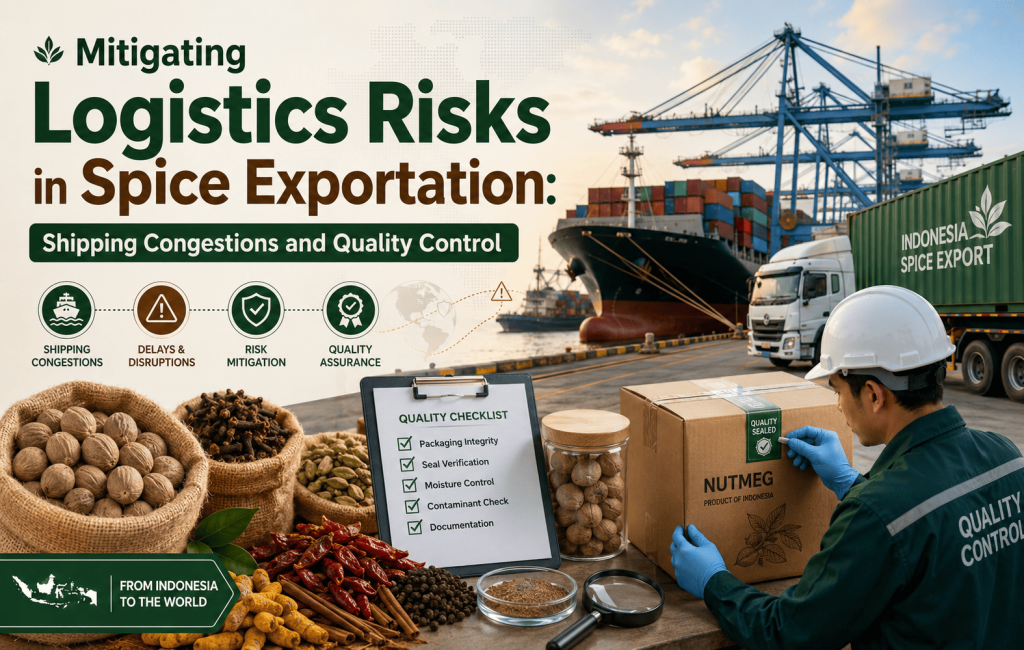
Mitigating Logistics Risks in Spice Exportation: Shipping Congestions and Quality Control
For B2B importers, managing spice export logistics risks is as critical as securing the right product quality. Specifically, logistics failures can nullify the best quality control at origin. Consequently, understanding spice export logistics risks and their mitigation strategies protects your supply chain investment. For context on broader quality assurance, refer to our bulk nutmeg shipping and packing standards guide.
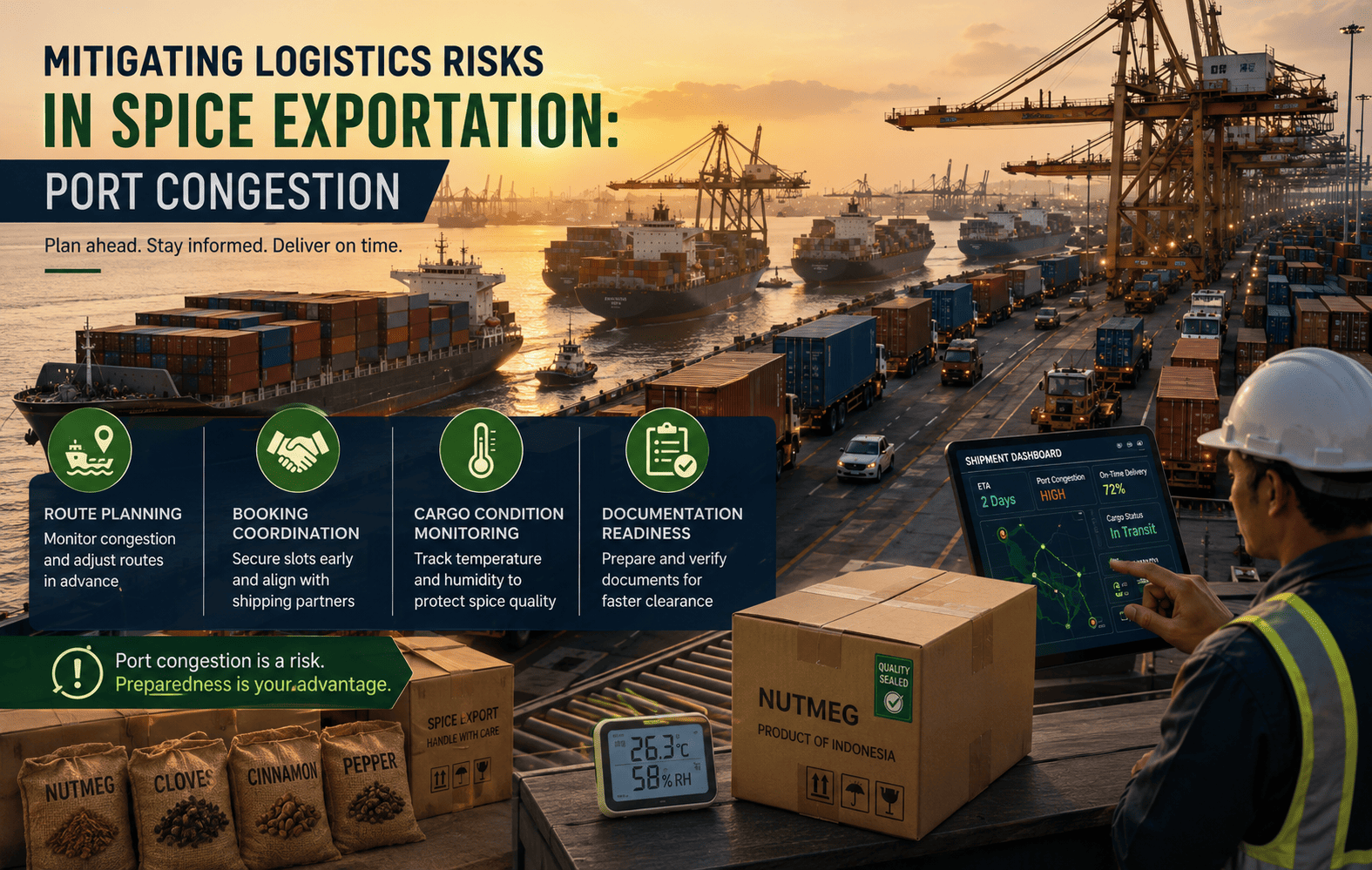
Spice Export Logistics Risks: Port Congestion and Delays
Firstly, port congestion is one of the most persistent risks in Indonesian spice exportation. Furthermore, major loading ports such as Tanjung Priok (Jakarta), Tanjung Perak (Surabaya), and Belawan (Medan) experience periodic congestion, particularly during peak export seasons. Consequently, these delays can lead to shipment rollovers and missed customer deadlines.
Mitigation Strategies for Port Congestion
| Risk Factor | Impact | Mitigation Strategy |
|---|---|---|
| Peak season backlogs | 2–4 week vessel delays, particularly during Q4 | Book space 4–6 weeks in advance, also consider off-peak scheduling |
| Container shortages | Unable to secure equipment, therefore higher costs | Maintain relationships with 2–3 container lines, as well as leasing options |
| Weather disruptions | Port closures, including schedule changes | Build 10–15% buffer in delivery timelines, for example seasonal planning |
| Customs inspection holds | Extended container dwell time, consequently delays | Ensure complete documentation before port arrival, such as pre-clearance checks |
| Transshipment delays | Missed connections at Singapore or Hong Kong | Select direct sailings when available, otherwise build in transit buffer |
Therefore, building buffer time into your shipping schedule is essential. Additionally, working with an experienced Indonesian spice exporter who has established relationships with multiple shipping lines provides more flexibility during congestion periods.
Spice Export Risk Mitigation: Container Quality Control
Furthermore, container conditions during sea freight directly affect spice quality. Specifically, moisture migration and temperature fluctuations inside containers can cause:
- First, condensation inside the container ceiling, also known as container rain
- Next, moisture absorption by spice kernels, consequently leading to mold growth
- Additionally, temperature spikes in containers on deck exposed to direct sunlight
- Furthermore, cross-contamination from previous cargo residues, such as chemical odors
Consequently, maintaining quality during transit requires a multi-layered approach:
| Control Measure | Purpose | Implementation |
|---|---|---|
| Container inspection | Check for damage, odors, and also cleanliness | Inspect before stuffing, for example via container survey report |
| Use of desiccants | Absorb internal moisture, thereby preventing mold | Place 2–4 kg desiccant bags per 20 ft container, including moisture indicators |
| Food-grade liners | Prevent direct container contact, specifically contamination | Line container interior with polypropylene sheets, also seal seams |
| Proper stacking | Maintain airflow around cargo, particularly in humid conditions | Leave 15 cm gap between pallet rows, as well as between cargo and walls |
| Temperature monitoring | Track in-transit conditions, therefore enabling intervention | Use data loggers inside the container, such as real-time IoT sensors |
| Vessel selection | Minimize temperature variation, consequently reducing condensation | Prefer refrigerated or ventilated containers for long transits, especially tropical routes |
The European Commission’s knowledge platform provides guidance on moisture-related risks in agricultural commodity shipments.
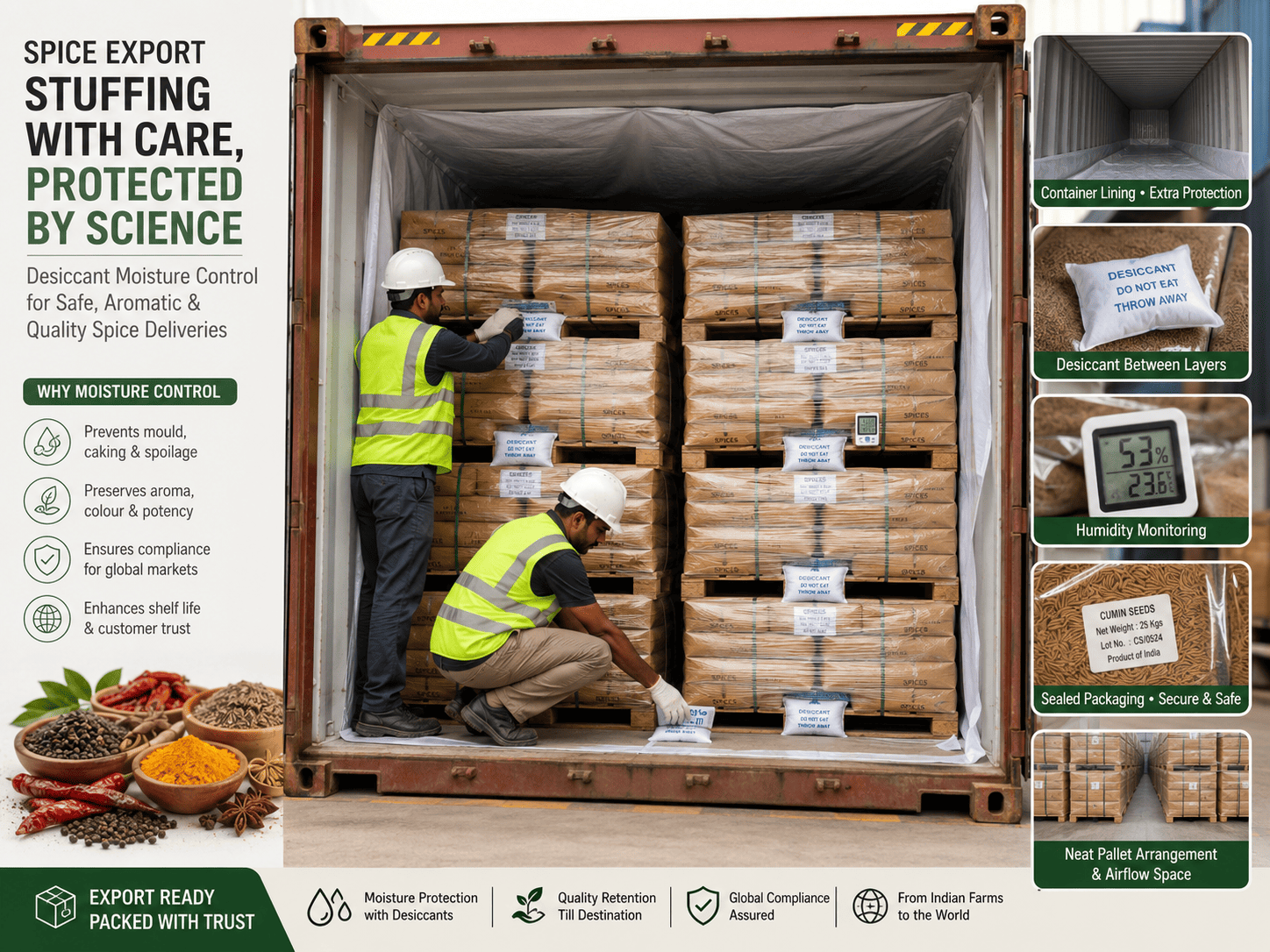
Spice Export Logistics: Stuffing and Loading Best Practices
Additionally, proper container stuffing is a core component of managing spice export logistics risks. Specifically, incorrect loading can cause physical damage, uneven weight distribution, and inefficient space utilization. Consequently, addressing these spice export logistics risks requires standardized loading procedures.
Key Loading Standards
- First, use polypropylene or woven bags with inner food-grade liners for whole nutmeg
- Next, ensure palletized loading for efficient handling and reduced damage
- Additionally, distribute weight evenly with heavier pallets at the container floor center
- Furthermore, secure cargo with dunnage bags or bracing to prevent shifting during transit
- Moreover, verify container ventilation settings for spice cargo requiring airflow
- Finally, seal containers with high-security bolt seals and record seal numbers
Similarly, for bulk mace, vacuum-sealed packaging inside ventilated containers provides optimal protection. The IMO guidelines on safe container packing should also be reviewed for compliance.
Documentation Risks in Spice Exportation
Furthermore, incomplete or incorrect shipping documents are a leading cause of customs delays, demurrage charges, and shipment rejections. Documentation failures represent a major spice export logistics risk that is entirely preventable. Therefore, thorough documentation review is essential:
| Document | Common Risk | Prevention |
|---|---|---|
| Bill of Lading (B/L) | Incorrect consignee name or HS code, therefore customs delays | Triple-check all fields, also verify with freight forwarder |
| Certificate of Origin | Origin criteria not met, particularly for GSP claims | Ensure exporter has valid COO, for example from the trade ministry |
| Phytosanitary certificate | Pest treatment not current, consequently shipment holds | Verify treatment date, specifically within 14 days of shipment |
| Packing list | Weight discrepancies, leading to demurrage | Weigh each pallet, as well as reconcile totals with warehouse records |
| Insurance certificate | Cargo value understated, therefore insufficient coverage | Insure at 110% of CIF value, including inland transit |
| Certificate of Analysis | Lab results expired, consequently quality disputes | Request COA dated within 30 days of loading, also check expiry |
Consequently, a pre-shipment document audit 48 hours before container stuffing prevents most documentation-related issues.
Logistics Risk Mitigation: Insurance and Claims Management
Additionally, despite all precautions, cargo damage or loss can still occur. Therefore, proper insurance coverage is a critical part of mitigating logistics risks in spice exportation:
- First, obtain marine cargo insurance covering Institute Cargo Clauses (A) for full coverage, including moisture damage
- Next, ensure the policy includes warehouse-to-warehouse coverage, particularly for multimodal shipments
- Additionally, verify that force majeure and strike clauses are included for Indonesian port contexts, specifically Java ports
- Furthermore, document loading conditions with time-stamped photographs, for example during container stuffing
- Finally, understand the claims process and required evidence before incidents occur, such as surveyor appointment procedures
In the event of a claim, promptly notify the insurer and surveyor, preserve damaged cargo and packaging, and provide all shipping documents and photographic evidence.
Supplier Role in Logistics Risk Mitigation
A reliable Indonesian spice exporter plays a central role in mitigating logistics risks in spice exportation. The exporter should provide:
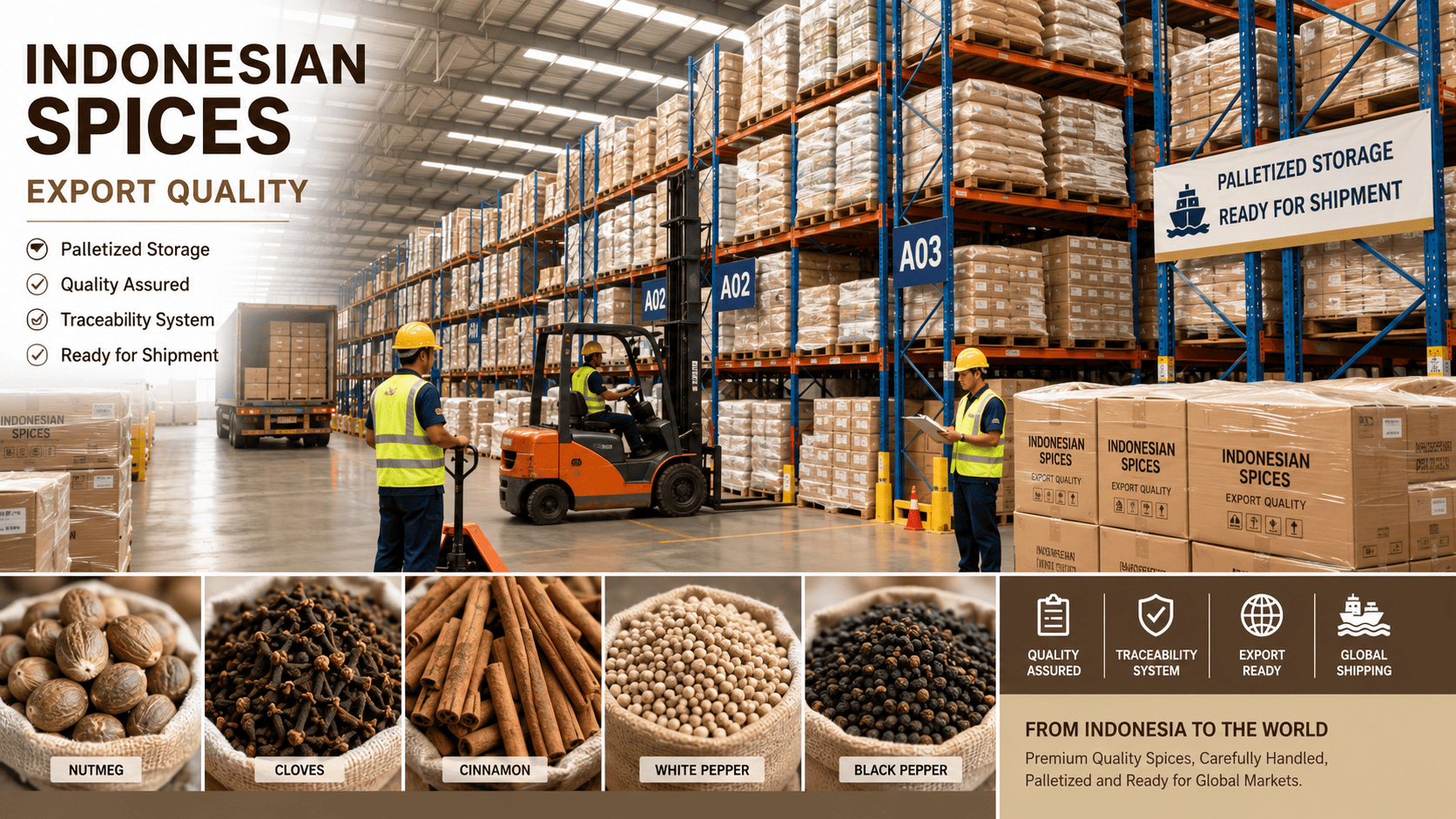
- First, pre-shipment container inspection reports, including cleanliness and damage checks
- Next, verified container stuffing documentation with photographs, also seal records
- Additionally, real-time shipment tracking information, particularly via online portals
- Furthermore, proactive communication on schedule changes, such as vessel delays
- Moreover, support during customs clearance at destination, including documentation follow-up
- Finally, expedited replacement documentation for lost or damaged papers, for example duplicate COO
Consequently, evaluating an exporter’s logistics capability during the vetting process — as outlined in our how to vet an Indonesian spice exporter checklist — directly impacts your supply chain reliability.
Summary: Key Actions for Mitigating Logistics Risks in Spice Exportation
In conclusion, mitigating logistics risks in spice exportation requires coordinated action across the following areas:
| Risk Category | Key Mitigation | Responsible Party |
|---|---|---|
| Port congestion | Early booking, also buffer time | Exporter and freight forwarder, together planning |
| Moisture damage | Desiccants, liners, also container inspection | Exporter, specifically quality team |
| Physical damage | Proper stuffing, dunnage, and palletizing | Warehouse team, as well as loading supervisor |
| Documentation errors | Pre-shipment document audit, consequently fewer holds | Exporter and importer, both review |
| Cargo loss or damage | Marine insurance at 110% CIF, including inland transit | Importer, with broker guidance |
| Schedule disruption | Real-time tracking, also alternate route planning | Freight forwarder, coordinating with shipping lines |
Overall, by implementing these strategies, procurement teams can significantly reduce the logistics-related risks inherent in Indonesian spice importation. For questions about our logistics processes or to discuss a specific shipment:
Email: [email protected]
WhatsApp B2B Helpline: +62 822-3332-2034
Head Office & Export Coordination: Modinan RT 007/RW 021, Banyuraden, Gamping, Sleman, DIY – Indonesia